
Research That Builds Resilience
High-quality research, data science, compliance, and research management for healthier and more sustainable communities.
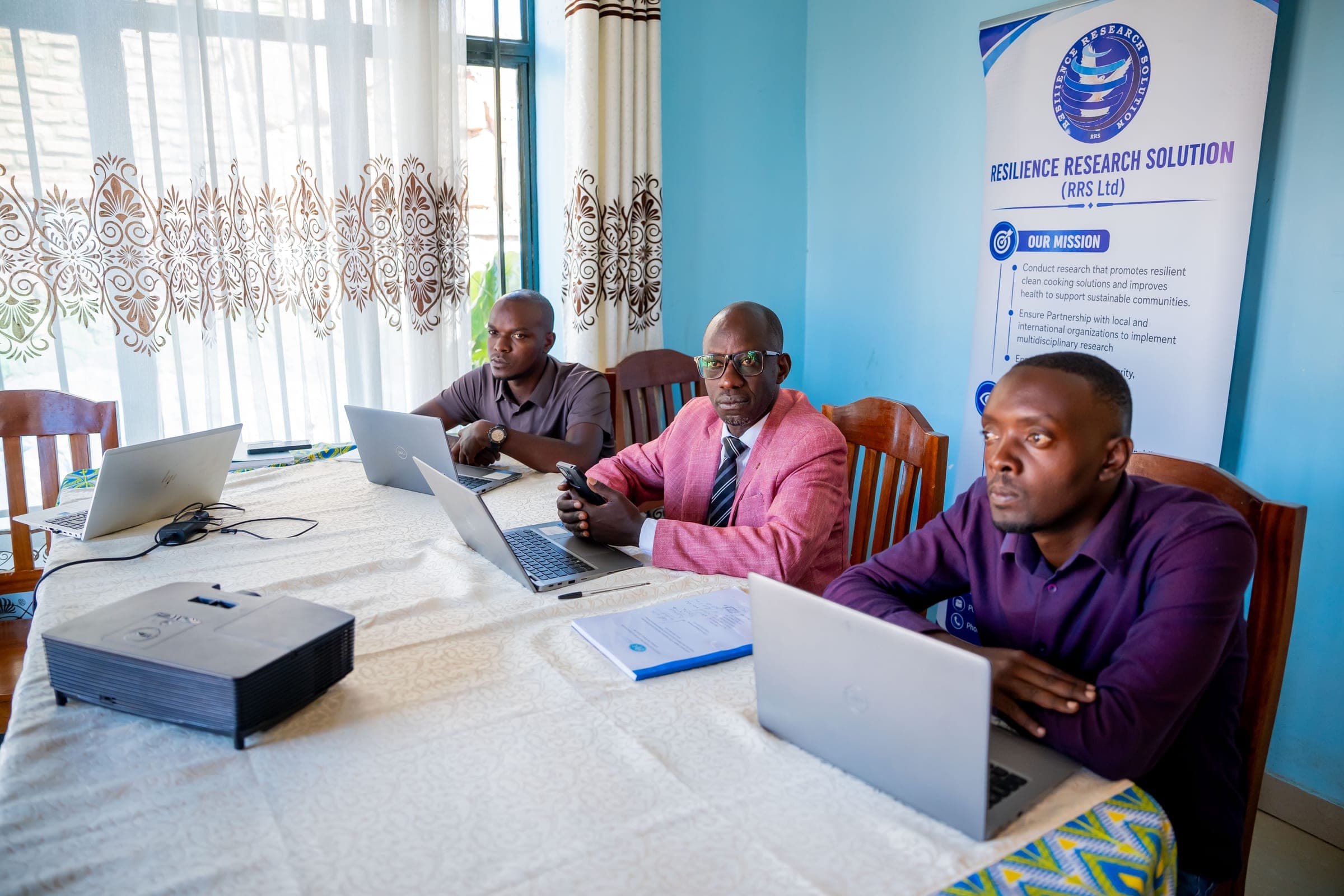
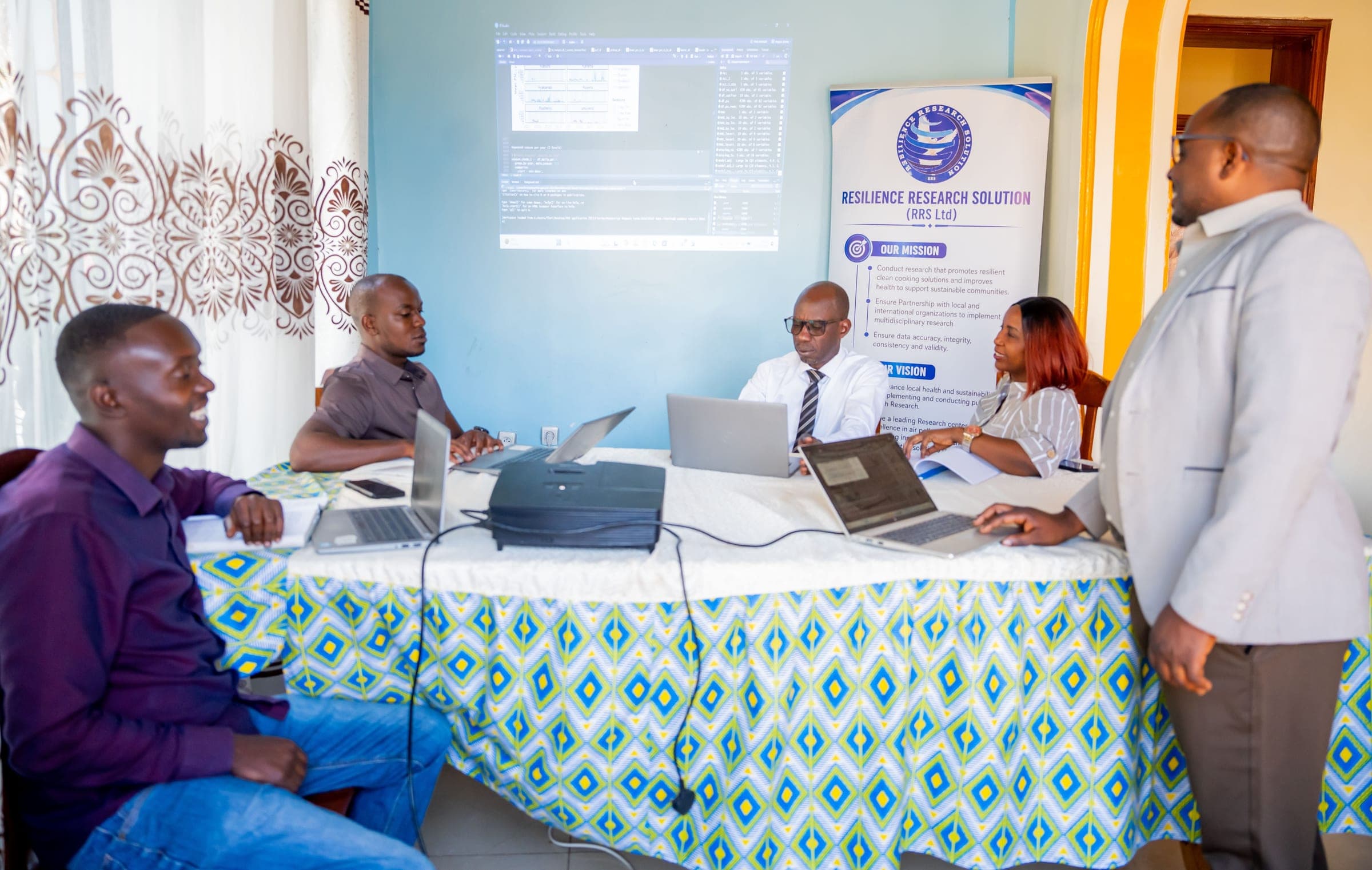
The Resilience Research Solution (RRS) is a research organization legally recognized in Rwanda. Founded to deliver high-quality research, implement impactful projects, and manage grant-funded research projects. RRS collaborates with both individuals and international organizations. Our experienced team brings extensive expertise in conducting research across diverse settings and overseeing a broad spectrum of projects.
Legal status
Registered in Rwanda
Base
Kamonyi District
Reach
Local & International Partners
Expertise
Public Health Research
One institution. Five integrated capabilities.
RRS does not provide isolated services — every capability feeds the next, from field data through compliance, analysis, management, and funding.
High-quality data collection built on local field expertise and strict quality control.
View serviceIntegrated research capabilities designed to turn complex questions into reliable evidence and actionable insight.
Rigorous Research
Our skilled and well-trained RRS staff consistently gather high-quality data, even in demanding environments.
- Local field expertise
- Data protection compliance
- Confidentiality by design
- Accuracy & completeness

Evidence begins in the field.
Every dataset RRS delivers starts with a researcher in the field — in homes, health facilities, and communities across Rwanda. We combine local knowledge and surveying expertise with rigorous data protection, secure handling protocols, and continuous quality control, so what is collected on the ground becomes evidence that stands up to international scrutiny.
- Local knowledge
- Field expertise
- Data quality
- Ethical research
- Technology
- Evidence

Research that promotes resilient, healthier communities.
- 01
Conduct research that promotes resilient clean cooking solutions and improves health to support sustainable communities.
- 02
Ensure partnership with local and international organizations to implement multidisciplinary research.
- 03
Ensure data accuracy, integrity, consistency and validity.
A leading center of excellence in environmental health research.
- 01
To advance local health and sustainability by implementing and conducting public health research.
- 02
To be a leading research center of excellence in air pollution monitoring, advancing innovative research and transformative solutions to safeguard environmental health and promote sustainable health development.
Built for research that demands rigor.
We build credibility through clarity of method, not marketing claims — every capability below is a discipline RRS practices on every project.
High-quality data collection
Local field expertise applied with rigorous quality control at every step.
Ethical, legal, and regulatory compliance
Research planned, executed, and reported to institutional standards.
Data science and modeling
Statistics and machine learning applied to structured and unstructured data.
Research management
Effective oversight of resources, timelines, teams, and budgets.
Transparent funding and grant management
Accountability and clarity in how project resources are used.
From question to evidence.
- 01
Understand
Research question and context.
- 02
Design
Research methodology and measurement.
- 03
Collect
Rigorous field data.
- 04
Protect
Ethics, privacy, confidentiality and compliance.
- 05
Analyze
Statistics, data science and modeling.
- 06
Manage
People, resources, timelines and funding.
- 07
Translate
Reliable evidence and actionable insight.
From data to insight.
RRS recognizes and utilizes emerging technologies to provide data insights that align with our mission of conducting resilient research. We implement machine learning to help RRS, and our partners obtain more accurate, cost-effective, and timely data insights.
Data Collection
Gathering raw data from diverse sources such as surveys, sensors, and technological devices.
Data Cleaning
Preparing and refining data to ensure quality by addressing missing values, inconsistencies, and errors.
Exploratory Data Analysis
Statistical and visualization techniques to identify patterns, trends, and relationships.
Machine Learning and Modeling
Applying algorithms to train models that predict outcomes, classify data, or identify patterns.
Data Visualization
Creating tables, charts, graphs, and dashboards to make insights easily understandable.
Data Interpretation
Drawing actionable conclusions to inform business decisions, policy, or scientific research.